(written by Anthony Ganci)
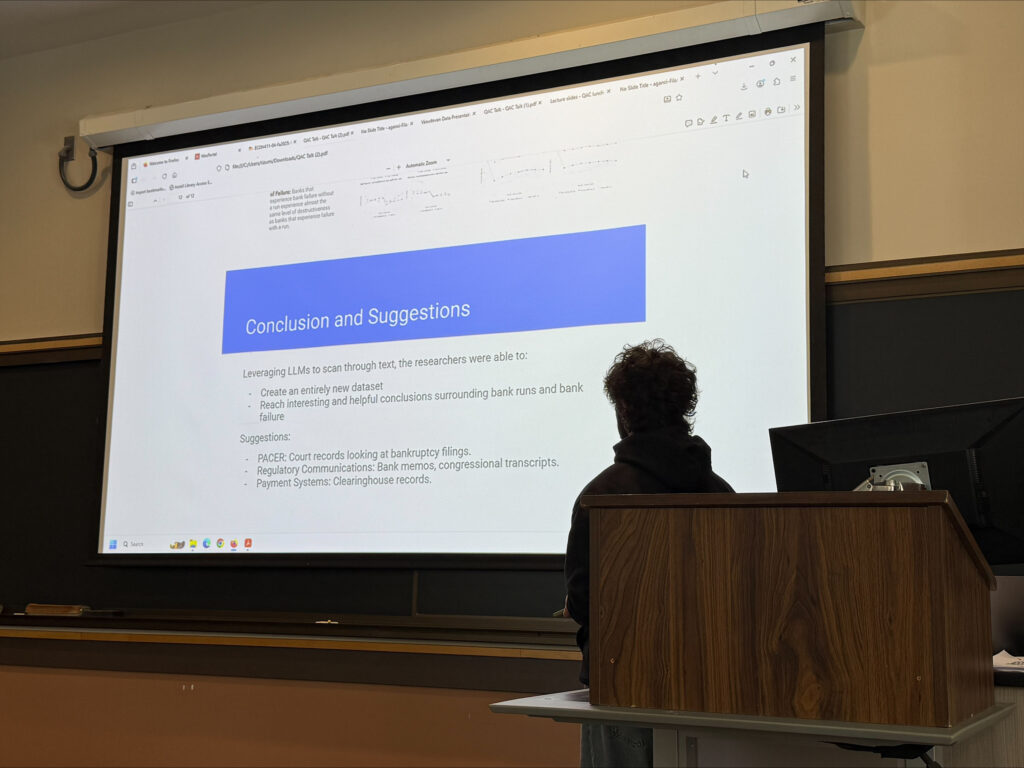
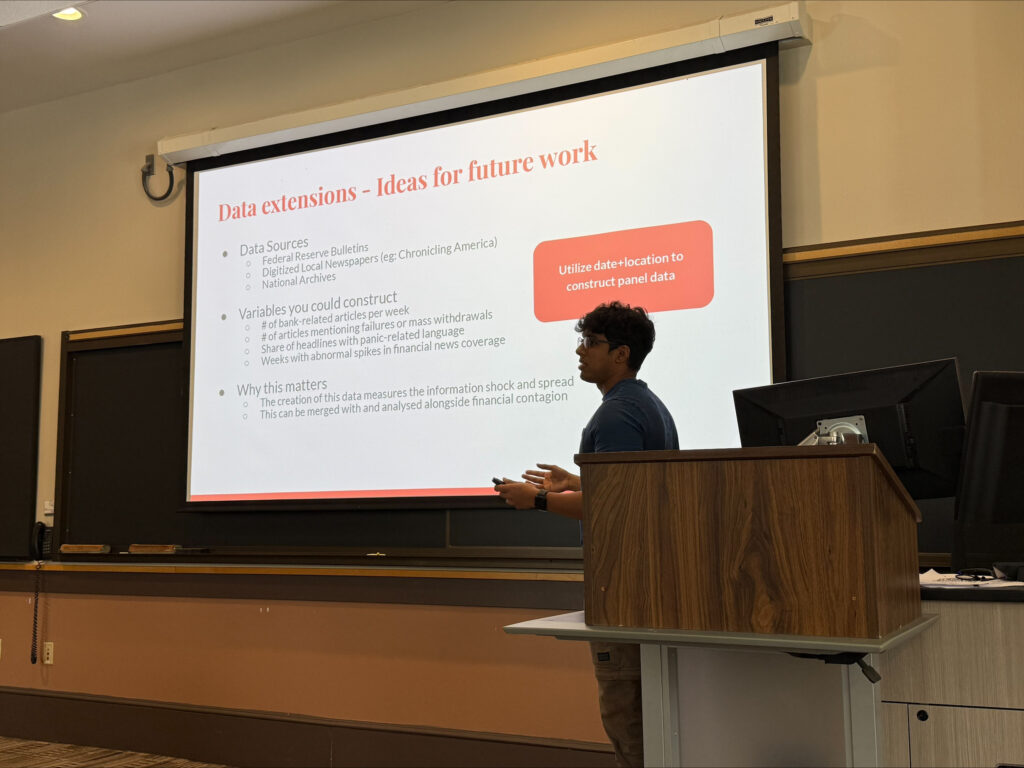
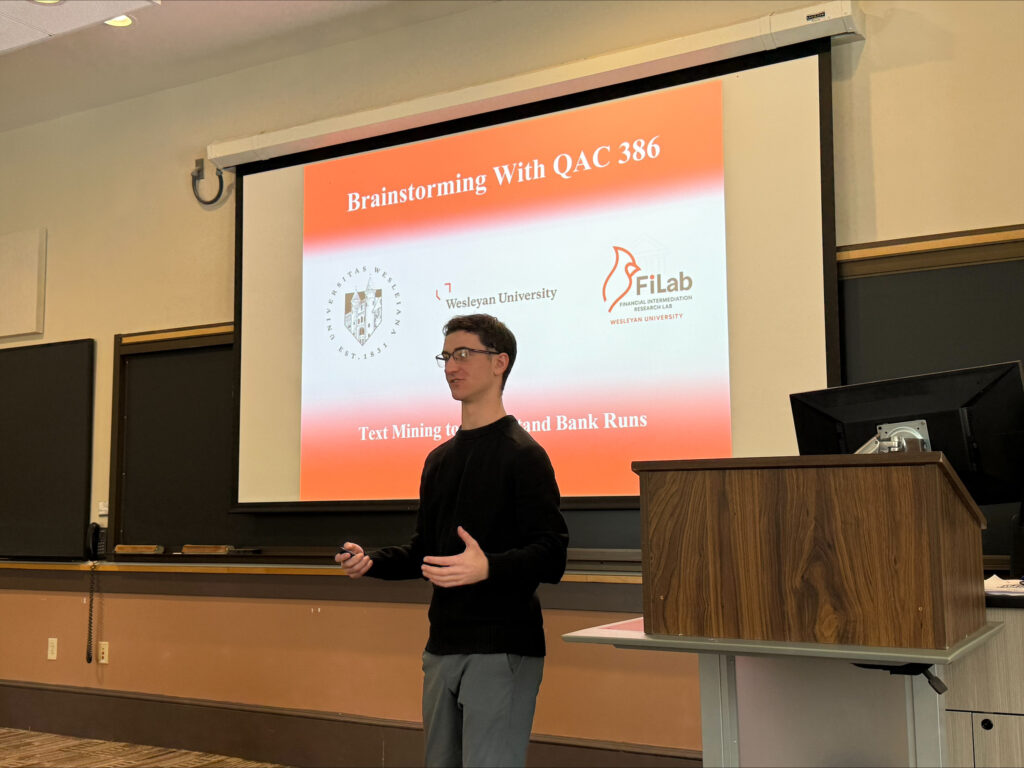
On February 11th, two other FiLab members and I presented to students in Quantitative Textual Analysis (QAC386). Students in QAC386 spend the semester learning how to text-mine data from several different sources, and their final project requires them to build their own dataset. The session connected their data-building skills with FiLab’s research interests in financial intermediation. It was a great opportunity to create mutual value across disciplines and to brainstorm datasets that could support future research.
Each member of our lab pitched an example of intermediation research that leveraged textual analysis, and the paper I shared was Social Media as a Bank Run Catalyst (Cookson et al, 2026, JFE). By textmining over five million banking-related tweets during the 2023 Silicon Valley Bank (SVB) run period, the paper investigated the relationship between the frequency of a bank’s name on Twitter, their run risk, and the severity of that run. The paper’s clear punchline, supported by multiple advanced textual analysis methods, was a great fit for a crowd of talented text researchers with varying previous knowledge of bank runs.
My presentation began by introducing the context of the SVB run and the scale of the event. My opening slide featured a tweet from a venture capitalist at the start of the run, advertising the $1.8B equity loss that sparked fear about SVB’s liquidity. The tweet got thousands of views and conceptually introduced QAC386 to how textual analysis may help us better understand contagion channels.
I then introduced the paper’s goals, research questions, and conceptual approach. To quantify Twitter’s role during the SVB run, the study collected data on the frequency of bank mentions and used VADER sentiment analysis to support more complex analyses. The textual analysis provided the study with quantitative and categorical variables on millions of tweets, including timestamps, authors, follower counts, sentiment scores, the number of retweets, and the authors’ believed profession.
With access to so much original data, the paper was able to investigate creative questions to arrive at powerful conclusions. They found that a bank’s ex-ante and interim Twitter exposure was associated with greater run risk and faster deposit outflows. Ultimately, they provided substantial evidence that social media is a catalyst that amplifies bank runs.
Addressing a group of students ranging from Economics majors to those who had never heard of a bank run before forced everyone in the lab to carefully consider how to market the papers we selected. After I broke down the paper, I pitched six ideas for datasets that I confirmed were both feasible for a QAC386 student to build and contained information that could help FiLab. Some of the most popular ideas I pitched were text mining congressional hearings on crypto policy and scraping bank home pages to look for how frequently different banks mention digital assets.
These unique invitations to collaborate across disciplines are a special part of the liberal arts experience, which is especially reinforced by a small community of just three thousand. Professors from several departments were involved in the event as well, exemplifying the administration’s strong commitment to these opportunities. We look forward to leveraging more talent from the community in the future as we strive to produce differentiated work that adds value to a wide audience.